
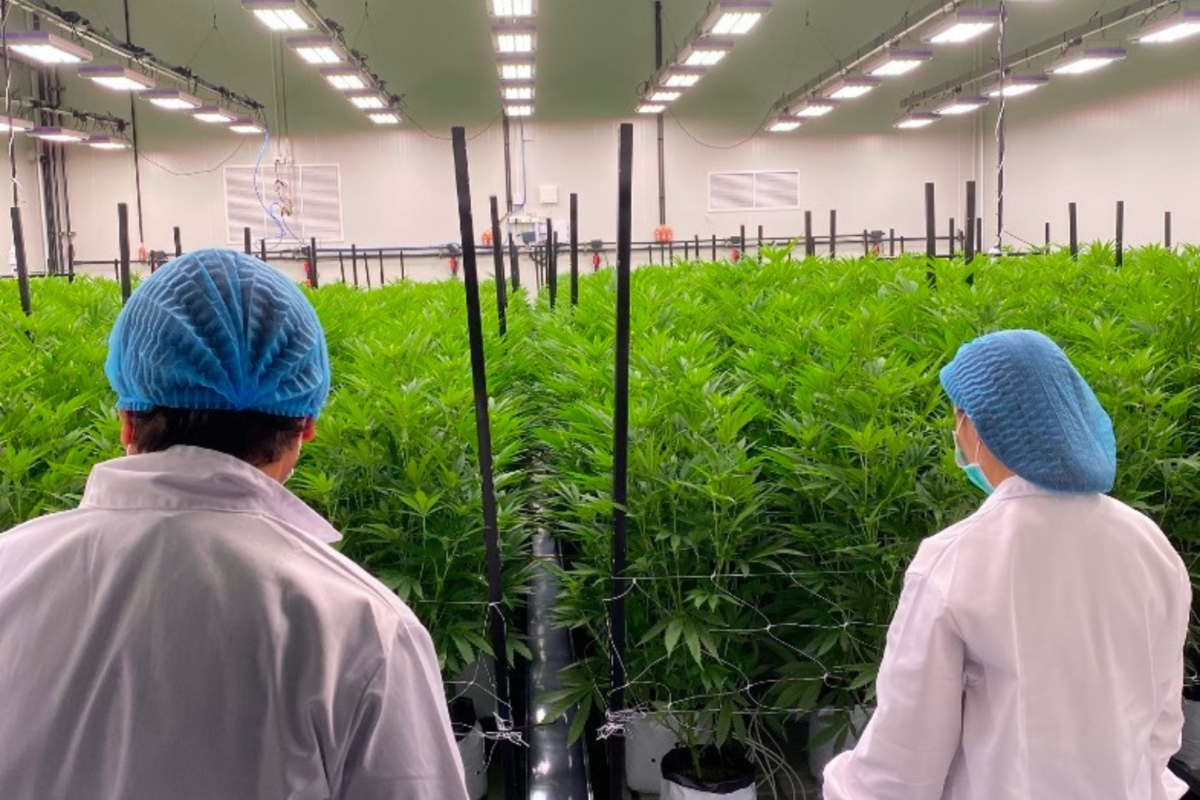
A misconception circulates in international cannabis circles: that Thailand has reversed course on cannabis, that the plant is now illegal, or that the market has collapsed into regulatory chaos. None of this is accurate.
Thailand operates a regulated medical cannabis framework under the Ministry of Public Health. What happened in mid-2025 was not a dismantling of the industry but a formalisation of rules that had been ambiguous since decriminalisation in 2022. For international operators—cultivators, GMP manufacturers, technology providers, extraction specialists—Thailand remains the only legal cannabis market in Southeast Asia and the most credible entry point into the broader Asia-Pacific region.
How Thailand Got Here
Thailand became the first country in Southeast Asia to legalise cannabis for medical purposes in December 2018, amending the Narcotics Act of 1979. Patients with approved conditions could access cannabis through licensed practitioners, including traditional Thai medicine healers. Production stayed tightly controlled: government entities, universities, and agricultural cooperatives only.
Then came June 9, 2022. Cannabis was removed from the Category 5 narcotics list. The government handed out free plants to households. One exception remained: extracts above 0.2% THC stayed classified as narcotics. But cannabis flower—including high-THC varieties—was suddenly uncontrolled, and no framework governed its sale.
What followed was predictable. Dispensaries multiplied. By 2024, more than 11,000 had opened nationwide, concentrated in tourist zones. No prescriptions required. No quality control. No testing mandates. International media called it recreational legalisation. Technically wrong—public consumption remained a nuisance offence—but practically accurate.
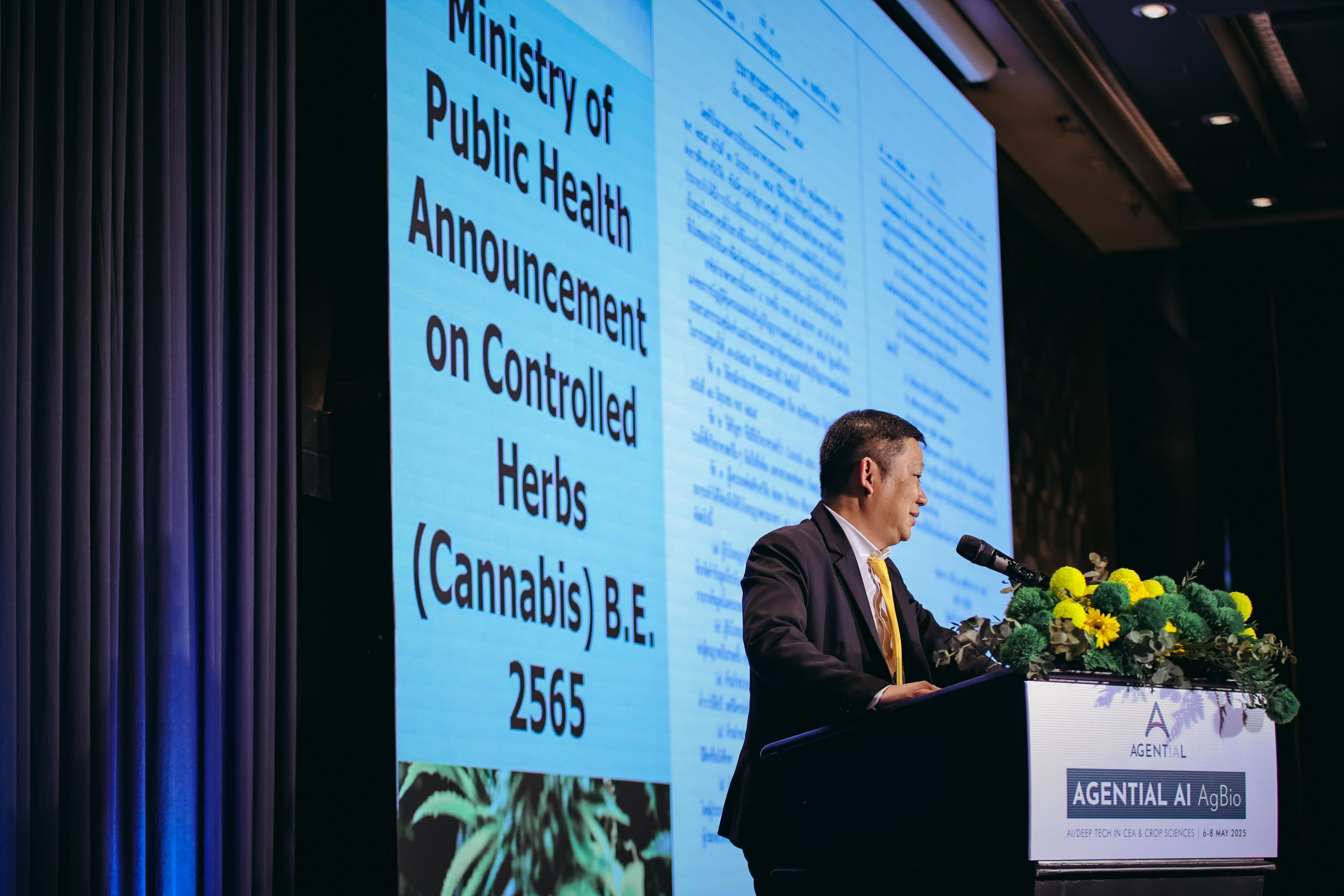
Mid-2025 closed the gap. On June 25, the Ministry of Public Health classified cannabis flower as a Controlled Herb under the Thai Traditional Medicine Act. This was not new legislation but an application of existing public health law—a legally significant distinction that gave regulators immediate authority without waiting for parliament. The prescription requirement took immediate effect. The walk-in retail model ended.
None of this should have surprised anyone paying attention. The trajectory since 2019 has been toward greater regulation, not less. Short-term volatility was inevitable; the long-term direction was always clear.
The Current Framework
Three authorities govern cannabis in Thailand.
The Ministry of Public Health sets overarching policy through ministerial notifications—defining legal classifications and advertising restrictions.
The Department of Thai Traditional and Alternative Medicine enforces the Controlled Herb framework for cannabis flower. DTAM handles cultivation licensing, GACP certification, prescription standards, and supply-chain traceability. As of late November 2025, DTAM reported 11,814 licensed cannabis-related operators and 149 GACP-certified farms.
The Thai Food and Drug Administration regulates extracts, foods, and beverages. The 0.2% THC line is the critical divide. Products below it can be used in food, cosmetics, and wellness applications without prescription. Products above require medical authorisation from a licensed Thai practitioner. Foreign prescriptions are not recognised. Maximum supply is 30 days.
For genetics, seeds are currently the only pathway for introducing new cultivars. Imports require a Department of Agriculture permit plus phytosanitary certification. Live plant imports are effectively prohibited under the Plant Quarantine Act.
Export controls are layered by product type and map to the same authorities: flower through MOPH/DTAM, seeds through DOA, extracts and finished products through FDA.
All of this regulatory architecture exists to serve one goal: getting consistent, quality medicine to patients. Understanding what that actually requires—and what stands in the way—is the only framework that makes sense of Thailand’s cannabis industry.
Why This Matters for Patients
The farm-level challenges described throughout this article are not abstract industry problems. They translate directly into patient outcomes. Australia’s medical cannabis market—now serving over one million patients with access to more than 800 products —offers a useful lens for understanding what a mature, patient-centred system looks like, and what Thailand might build toward.
When a doctor prescribes medical cannabis, they are making a clinical decision based on expected outcomes. Those expectations depend entirely on product reliability. A patient with chronic pain who responds well to a particular cultivar and cannabinoid profile needs to be able to access that same product, batch after batch. Prescribers who have seen positive results with specific formulations need confidence that those formulations will remain available and consistent. This is the foundation of any legitimate medical system: predictable inputs producing predictable results.
In Australia, patients now benefit from a competitive marketplace where multiple suppliers offer tested, labelled products meeting TGA standards. Prescribers have built familiarity with product ranges. Pharmacists understand what they are dispensing. The infrastructure exists for patients to receive follow-up care calibrated to specific products. None of this happens when supply is erratic, quality variable, or products disappear from the market without notice.
Affordability follows from scale and competition. Australian imports have grown nearly tenfold in three years, and domestic cultivation has expanded alongside. Prices have fallen. Products that once commanded premium pricing now face competitive pressure. Patients who previously rationed their medication or supplemented with black market product can increasingly access legal supply at sustainable price points. This is what market maturation looks like.
For Thai farms, the patient-centred frame reorients the value proposition entirely. A farm selling GACP-certified flower as raw material—an API (active pharmaceutical ingredient) starting material, destined for processing elsewhere—captures only the first link in the value chain. The margins are thin. The buyer relationship is transactional. The product becomes anonymous the moment it leaves the farm gate.
A farm selling GMP-certified finished flower—tested, labelled, and ready for dispensing—captures the entire chain. The economics shift dramatically. Finished products command multiples of raw material pricing. The farm’s brand reaches prescribers and patients. Reputation compounds. Repeat business becomes possible based on clinical outcomes, not just cost per kilogram.
The same logic applies, potentially even more powerfully, to extracts and oils. As Thai GMP capabilities develop, farms that can produce finished oil products meeting European Pharmacopoeia standards will access markets that pure cultivators cannot. Germany, the UK, and Australia all import significant volumes of finished cannabis medicines. The demand exists. The regulatory pathways exist. What remains is the Thai capability to meet them.
This is not merely about export revenue. Domestic Thai patients will benefit from the same quality infrastructure. As Thailand’s medical framework matures, patients will increasingly expect—and regulators will increasingly require—the same standards of consistency and testing that define legitimate pharmaceutical markets elsewhere. The farms investing in GMP now are building for that future.
The question is not whether quality matters. The question is whether Thai farms will be positioned to deliver it—to their own patients and to the world.
Delivering on that promise requires navigating a series of interlocking challenges. Each one builds on the last. It starts with what exists on the ground.
The Cultivation Landscape
The first thing that surprises international visitors is that Thai cannabis cultivation is overwhelmingly indoors.
Thailand is hot. The tropics create conditions hostile to quality cannabis production. Mould pressure is relentless. Outdoor cultivation for pharmaceutical-grade product is more aspiration than reality. So controlling the environment solves the problem, and Thailand offers economics that make it viable: constructing a fully insulated, climate-controlled facility costs substantially less than in Australia, Europe, or North America.
Foreign capital underpins much of this infrastructure. Investors from Australia, the United States, Ukraine, Russia, China, and across Europe have money deployed here, structured through partnerships that comply with Thai majority-ownership requirements. Under Thai law, cannabis businesses must be at least 51% Thai-owned with two-thirds Thai directors. Joint ventures are common. There are also many wholly Thai-owned farms.
Cultivation facilities are scattered all across the country but cluster in recognisable patterns. Dense pockets west and east of Bangkok. Around Pattaya. Northern regions near Chiang Mai. Several farms purport 1–2 tons per month capacity. The scale of their infrastructure supports the claims.
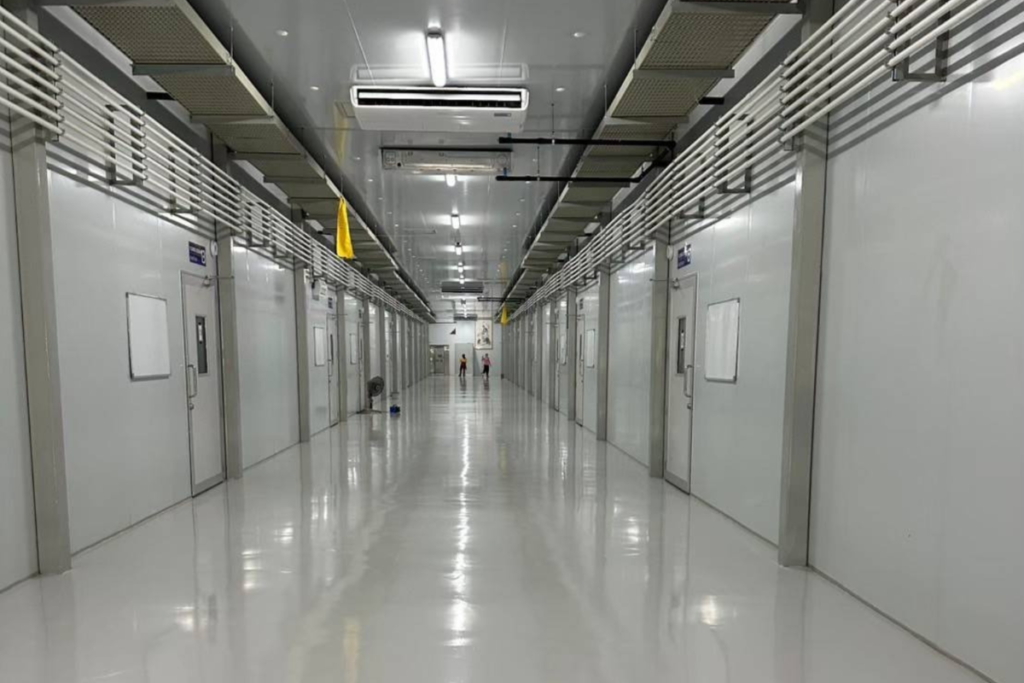
The sophistication gap between operations is vast. At one end: farms positioning explicitly for European GMP certification, maintaining sanitation levels that are closer in resemblance to cleanrooms than indoor horticulture. At the other: farms are still watering individual plants by hand on concrete floors with minimal environmental controls in post-harvest areas.
Thai GACP certification has become somewhat of a dividing line. As of late 2025, 149 farms hold certification against more than 11,800 legacy licence holders. Farms without certification face exclusion from the regulated domestic supply chain.
The economics facing these farms are brutal—and the certification divide only sharpens the pressure.
On one side, the grey market. It pays less—but it pays now. Cash. No paperwork. No waiting weeks for export permits. No buyer scrutiny.
On the other side, the regulated pathway. GACP certification. Export licensing. European Pharmacopoeia standards. Traceability systems. The promise is higher margins and international market access. But delayed commercial terms that put risk back on the farm. The reality is capital expenditure, compliance costs, and timelines measured in months or years.
Some farms are straddling both, selling what they can into grey channels while attempting to build infrastructure that regulated markets require. The economics force this.
This is driving divergent outcomes. Many farms are currently expanding to reduce their COGs through economies of scale. Others have opted out of the regulated pathway, content to serve grey market buyers. Still others have entered hibernation, running at 10-15% capacity while waiting for a contract grow to materialise. Some have shuttered operations altogether.
The secondhand equipment market tells the story. It is flooded with LED grow lights and cultivation gear from operations that are upgrading to better quality hardware or have simply closed shop.
The squeeze tightens from multiple directions—including inputs that most international operators take for granted.
Compliant fertilisers cost more and come from fewer suppliers. Cheap alternatives carry contamination risk—cadmium, arsenic, sequestered in plant tissue. One contaminated batch can sink an export shipment. Farms cutting corners on inputs are gambling with their futures.
Biological controls are another gap. In California or the Netherlands, specialist insectaries breed predatory mites, parasitic wasps, and beneficial nematodes, shipping them fresh to farms on demand. In Thailand, no such supply chain exists. Farms wanting to pursue pesticide-free production have nowhere to source them locally.
Electricity is the highest cost for most farms. Achieving high yields per watt isn’t optional—it’s what separates viable operations from those bleeding cash. This requires grow room design, climate control, lighting, nutrition, genetics, and cultivation management working as a single system. Get any element wrong and the economics don’t work.
A well-known industry benchmark is around 1.5 grams of trimmed dried flower per watt of flowering light. Many Thai farms are not close to hitting this. Farms that meet half their yield targets don’t just underperform—their cost of goods effectively doubles. Catastrophic for any crop. And yield is only half the equation. Quality in craft cannabis—potency, terpene content, distinct profiles, colour, bud structure—sits adjacent to quality as defined by European Pharmacopoeia, which essentially means clean, consistent and traceable. Achieving both is what makes profitability in regulated cannabis production genuinely difficult.
If you visit enough farms in the region one thing becomes evident: the key issue facing most farms isn’t financial—it’s educational.
Meanwhile, flower keeps accumulating. The stockpile grows. The cash does not. The farms that navigate this need partners, not opportunists—suppliers, advisors, buyers who understand what it takes to build something here.
But infrastructure and economics are only part of the story. What Thai farms can grow is constrained by something harder to build than a facility.
The Genetics Problem
What distinguishes Thailand is openness. Site visits are generally easy to arrange. No regulatory headache. Thai operators tend to be genuinely hospitable—curious about overseas practices, willing to share local approaches openly. The appetite for knowledge exchange is real. The insularity that often characterises operations in other markets is refreshingly absent.
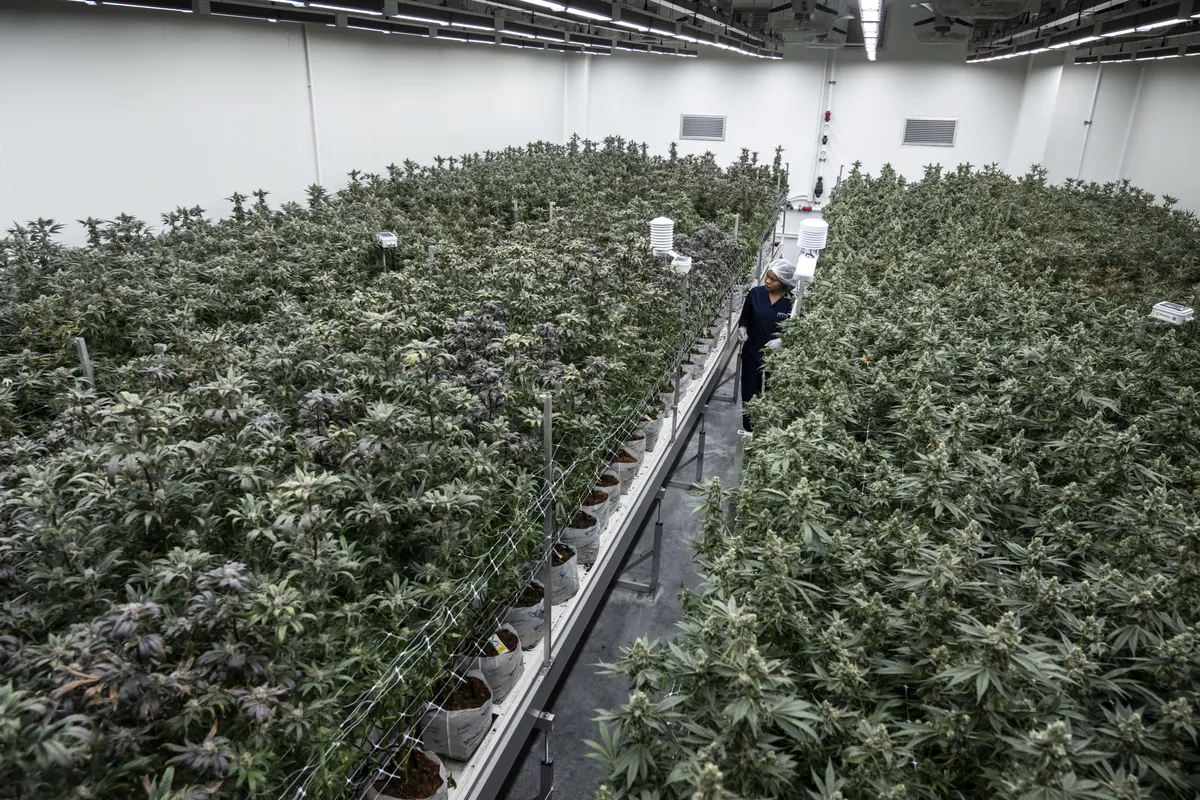
Walk through a dozen Thai cannabis farms and you will not find the breadth of established cultivars available in California or Colorado. The highly sought-after exclusive lines that define premium flower elsewhere do not exist here in abundance. This is the bottleneck for the region, and everything else follows from it.
Partly it is time. Identifying exceptional phenotypes from heterozygous seed stock takes years. Thailand’s legal industry is barely three years old. The work has not been done because the work takes longer than the industry has existed.
Partly it is pathway. Live plant imports are effectively prohibited. New genetics must enter as seed, which reintroduces the phenotypic variation that selection was meant to eliminate in the first place. You find a winner in Canada or the US, you import seeds of the same cross, and you start the hunt again from scratch. The clone that made the strain famous stays behind.
Partly it is expertise. Phenotype selection is a skill. This knowledge exists in Thailand, but it is not common. The talent pool is forming. It has not formed.
The consequences are predictable.
Export markets are built around branded products. Registering a new cultivar with foreign regulators is slow and expensive. Once approved, prescribers and patients expect continuity. The logic pushes toward locking in—committing to a handful of proven lines and replicating results batch after batch.
But for the farms, this is a gamble disguised as strategy. Back the wrong cultivars and you are trapped with product nobody wants.
The Tropicana Cherries glut made this visible. The strain—a visually striking purple cultivar—gained rapid popularity in the local scene. Farms rushed to grow it. But the nose was one-dimensional and the potency underwhelming. Supply had outpaced demand while demand was discovering it had been oversold. Surplus forced the price to nose dive. Some of that flower is still sitting in storage, unsold, degrading.
Contract growing offers no guaranteed reprieve for farms. Some international buyers provide farms with proprietary genetics and detailed product specs. When expectations align, these arrangements work. When they don’t, relationships collapse fast. Flower that falls short of spec gets rejected or repriced. Both parties walk away worse off.
The potency gap compounds the problem. Strains that test in the mid-thirties in mature markets rarely crack the mid-twenties here. Walk into a dispensary in Los Angeles or Portland and watch what moves. Potency is not a talking point. It is a pricing problem.
And beneath all of this, something worse is spreading.
Hop latent viroid has arrived in Thailand. Many farms have it and do not know. The symptoms are subtle—reduced vigour, diminished yields, plants that simply underperform without obvious cause. Infected mothers produce infected clones. It’s unlikely any operation in Thailand is running onsite PCR testing for HLVd. The problem compounds in silence.
The propagation infrastructure that would catch this does not exist. In the United States, farms choose from catalogues of rooted clones or tissue cultured pathogen-indexed plantlets. In Thailand, farms work from seed or maintain their own mother stock, hoping nothing has gone wrong. Tissue culture facilities producing certified virus-free material are not yet commercially available at scale and there are only a handful of small nurseries specialising in propagation and genetics.
The testing gap extends beyond pathogens. COA services come from a handful of labs with turnaround times stretching to weeks and costs that add up fast. Some farms test routinely regardless. Many others make phenotype selections, harvest decisions, and cure assessments without the data that would inform them. The infrastructure is thin, and farms that want to run tighter operations face real friction.
Every one of these problems has been solved elsewhere. The question is how that knowledge reaches Thailand. The bottleneck is real. So is the path through it—for farms with the right connections.
What Thailand has that cannot be imported is landraces. Thai genetics have been cultivated here for centuries—outdoor varieties adapted to tropical photoperiods, genetically distinct from North American and European cultivars. For breeders chasing novel traits—disease resistance, unusual terpene expression, rare cannabinoids—this is raw material barely touched.
Finding the right cultivars is one problem. Finding people who can grow them at scale is another.
The Talent Gap
In the United States, you can hire a cultivation director with 20 years of commercial experience—someone who has built facilities from bare concrete, managed IPM through multiple pest incursions, overseen hundreds of crop cycles, and successfully navigated compliance each time. These people exist in numbers. They answer job postings.
Thailand does not have this. The industry is three years old. The talent pool is three years deep.
That does not mean competence is absent. Some farms have achieved results that would hold up anywhere. Certain Thai operators returned from stints in California and brought real knowledge back. But these are exceptions, not a labour market.
It’s not as though commercial operators from regulated markets were sitting in Thailand waiting for legalisation. Some have arrived with real experience—most set up their own farms rather than consulting for others. Small-scale cultivation backgrounds don’t automatically translate to managing a 2000-light facility under GACP compliance. The skill set Thai farms need is specific and rare regardless of where someone comes from.
Importing genuine talent is possible but expensive. The economics only work if the package includes equity—and equity in a Thai cannabis venture means foreign ownership restrictions, partnership risk, and a regulatory environment that has already shifted twice in three years.
Then there is the ‘arm-chair’ consulting model that sounds sensible from a distance: retain a specialist overseas, conduct calls, review data remotely, invoice monthly. This generally does not work in Thailand.
Cannabis cultivation is not a knowledge-transfer problem that resolves over video calls. It is a relationship problem. Thai operators do not open up to strangers dispensing advice from laptops in foreign time zones. They open up to people who show up—who walk the rooms, who eat lunch with the team, who return again and again until trust is established. Advice that is not grounded in relationship is advice that will not be implemented.
This dynamic is not unique to Thai-Western interactions. The tendency to hire within one’s own network, regardless of competence, is universal—a Chinese-owned farm might bring in growers from neighbouring countries because the labour is cheap and connections already exist, not because the skill set matches. And the farms most likely to fall into this trap are often the hardest to reach: no website, no social media, no address on Google Maps. They operate quietly, keep their heads down, and will not be found by anyone sending cold emails. They will be found by someone who is here, who knows someone, who gets an introduction, who shows up and demonstrates value before asking for anything.
The talent gap is real. It will not be closed by remote consultants or self-taught expats. It will be closed by people willing to relocate, to invest time before money, to build relationships in a market that runs on relationships.
Assume you solve the people problem. The next place value disappears is after harvest.
Where Harvests Go to Die
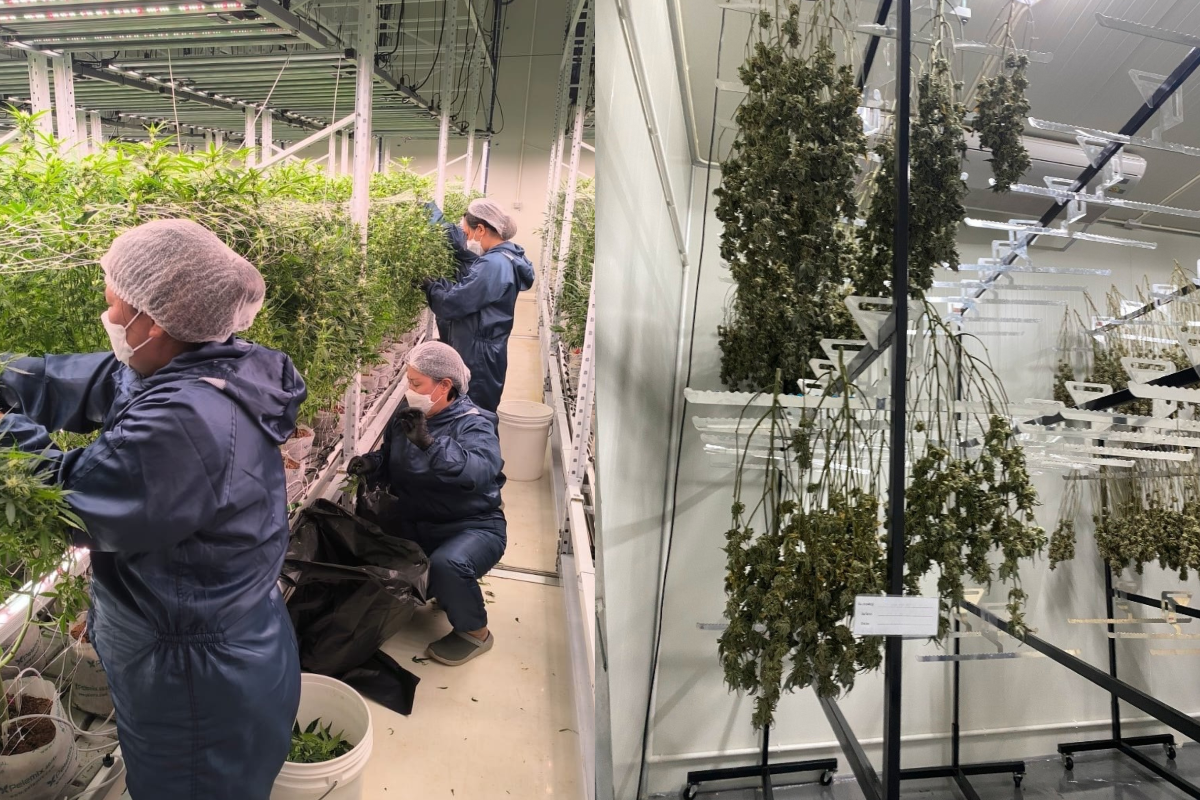
Thai farms can grow excellent cannabis. Many do. The problem is what happens after harvest.
Cannabis should be around 10% moisture by the time it reaches the consumer. But product dries out as it moves through the supply chain—each repack from bulk to smaller bags loses a little more. So wholesale dispatch from the farm should be 11-12%: high enough to preserve terpenes and land at 10% after handling, low enough to avoid mould in transit. Miss the window in either direction and there are problems. Too wet, and it’s a mould risk. Too dry, and it’s essentially destroyed.
Many Thai farms over-dry to 6-8%, sometimes lower. The logic is understandable but wrong. Nobody wants to buy yellow-brown flower, so the thinking is: lower moisture, slow chlorophyll breakdown, preserve the green. It works. The flower stays green for months. It sells—at least to the grey market.
But by 6% moisture, many of the terpenes are gone—volatilised during post-harvest processing. What remains looks like cannabis, photographs well, smells like hay, is harsh on throat. Rehydration can add some moisture back. It cannot recapture aroma.
Storage compounds the damage. Some operations maintain proper cold storage with humidity control. Others—including large multi-storey distribution warehouses—sit uncontrolled in the mid-30s Celsius. Product degrades. There is no regulatory requirement to destroy flower after a set period. Old product accumulates alongside new.
The economics are punishing. Fresh premium wholesale commands 30-40 baht per gram. Overdried product sells for a fraction of that, and its often old precisely because it hasn’t found a buyer. The difference between getting this right could be 5x multiplier on post-harvest value.
Thai farms have improvised remarkably with no established playbook. But post-harvest is where knowledge gaps persist. The expertise exists internationally. The connections don’t. Farms looking to optimise need the right people in the room.
The hand-trim remains a point of pride—one of Thai flower’s genuine hallmarks. What comes before and after is where value is lost.
And even flower that survives all of this—grown well, processed correctly, stored properly—still has to leave the country. That’s where the real complexity begins.
The Export Challenge
Ask anyone who’s actually exported to Australia or Europe and you hear the same thing: International cannabis export is not a logistics problem. It is a multi-jurisdictional regulatory obstacle course in which every party must align perfectly across disparate legal systems with no obligation to harmonise. One weak link and the chain breaks. The chain has many links.
On the Thai side: MOPH and DTAM licensing, GACP certification, documentation that satisfies regulatory requirements. On the destination side: import permits from national health authorities—Germany’s BfArM, Australia’s ODC and TGA—each with their own requirements and timelines. Permits are tied to specific shipments, quantities, and suppliers.
Thai flower is GACP-certified, not GMP-manufactured. Most destination markets require GMP processing, which means routing through a contract manufacturing organisation. Portugal built an industry on this model, though recent enforcement actions have tightened controls and extended timelines across European supply chains.
The direction of travel for serious operators is vertical integration—controlling cultivation, processing, and GMP certification under one roof. Colombian producers have already built EU-GMP facilities domestically. Some Thai operations are exploring the same path.
Product stability adds complexity. Cannabis degrades. Terpenes volatilise. THC oxidises. Shipments that test within specification at departure may test differently on arrival if cold chain integrity lapses or transit extends.
Airlines and forwarders have periodically suspended cannabis shipments after incidents involving unauthorised product. Restrictions have eased, but logistics providers remain unenthusiastic.
Thai flower has reached international markets. The trajectory is improving. The pathway is long, expensive, and demands precision. The operators navigating it successfully understood that from the start.
But even with all these obstacles, Thailand offers something no amount of infrastructure elsewhere can replicate.
Why Thailand
Across the borders, they kill people for this. Singapore hanged a man for cannabis trafficking in 2023. Malaysia keeps the mandatory death penalty on the books. Indonesia, the Philippines, Vietnam—prohibition unchanged.
Thailand legalised. Nobody followed.
What exists here is unprecedented: thousands of licensed operators and a volume of production—legal, grey, and everything in between—that rivals some of America’s most prolific cannabis states. Thailand remains, by a considerable margin, one of the most permissive cannabis markets in the world. While regulation is tightening, enforcement stays light, but lawmakers have no shortage of offshore case studies to draw from as they shape what comes next.
Some farms are thriving. Others are struggling. The difference is rarely capital—it’s knowledge, and knowledge moves through people. The genetics exist. The SOPs exist. The capital structures have been proven elsewhere. What Thailand offers is something those mature markets cannot: a legal framework in Asia, operational costs that make experimentation affordable, and a regulatory environment still open enough to shape. The window is measurable in months, not years. The operators who show up now—who build relationships, transfer expertise, solve real problems alongside Thai partners—will own the regional playbook.
The local retail market remains constrained. Most dispensaries are relationship-driven. Quality does not guarantee placement. Some outlets are owned by farms. Others buy from friends regardless of what competitors offer. A foreign operator arriving with superior flower and no relationships will find the market indifferent.
But export is where the prize sits. And for those willing to navigate every obstacle outlined above, the opportunity is singular.
For international operators, the question is simple: be in that room, or watch from outside it.
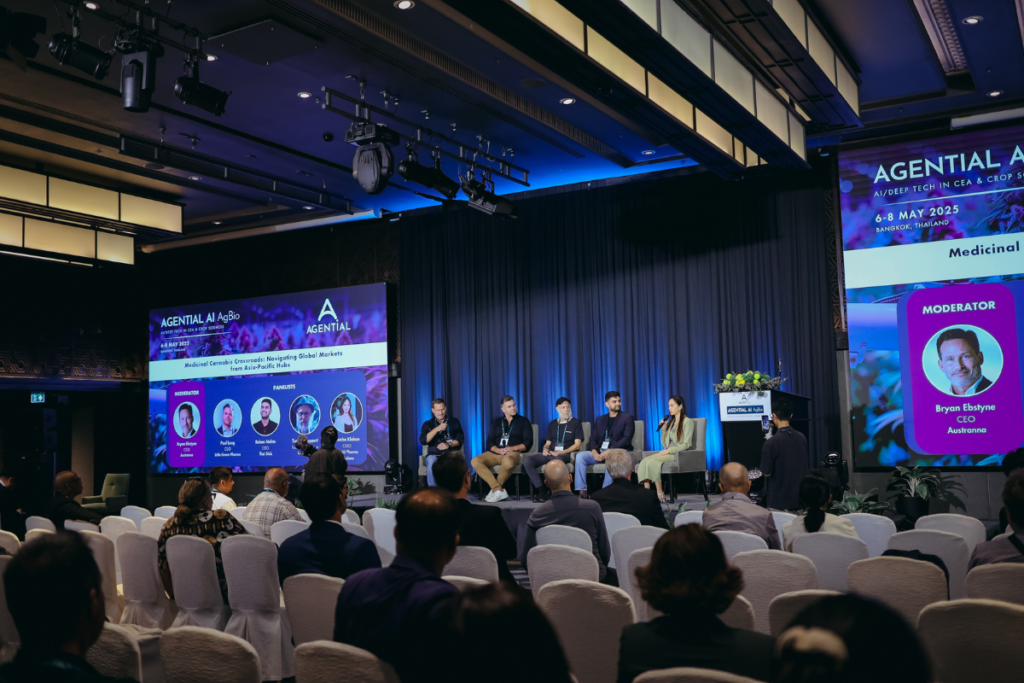
Agential Cannabis 2026, taking place 23–24 September at BITEC, Thailand, brings together Thai regulators alongside APAC operators and international technology providers to engage on the region’s evolving medicinal cannabis framework.