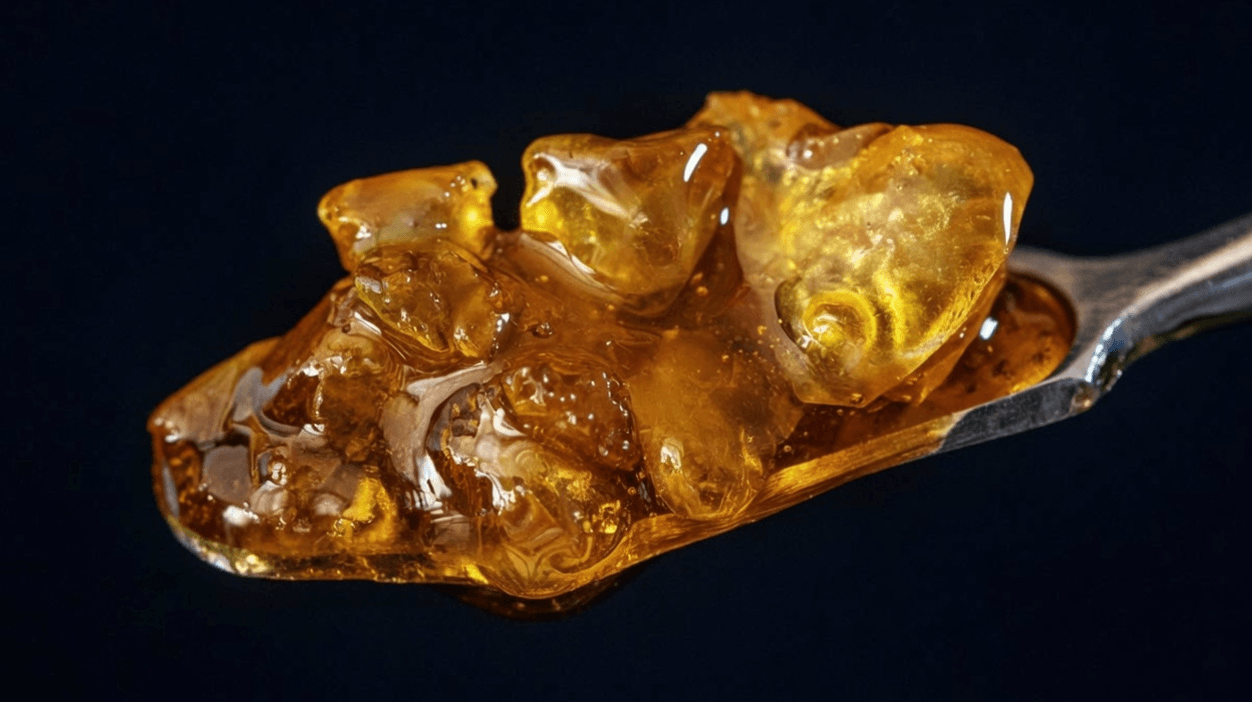
Four. That is the total number of export licences for high-THC cannabis extracts (technically anything above 0.2% THC, all the way to 100%, regulated as Category 5 narcotics) granted by the Thai FDA’s Narcotics Control Division as of March 2026: three private companies — Energrow (Thailand) Co., Ltd., Eastern Spectrum Group Co., Ltd., and Cannex Lab Co., Ltd. — and one university, Chulalongkorn.
Why only four? Broadly, because everyone rushed into flower. The licence was easier to get and the path to market was easier to read, so extracts got a reputation as the hard road. That reputation was a side effect of how easy flower looked — not a real measure of the extract opportunity. For a lot of licensed producers, the flower distraction came with a steep opportunity cost in extracts, and that is only now starting to register.
The numbers, from the source
The figures here come from the FDA’s Narcotics Control Division, first provided on 5 February and confirmed unchanged on 25 March 2026: 38 licensed extraction facilities and 4 licensed to export. The same dataset shows the 38 production (extraction) licences split roughly 30 for research — held mostly by government agencies and universities — and 8 for medical purposes, held by the Government Pharmaceutical Organisation and private operators including the three exporters above.
More important than the count is the curve:
- Production licences are compounding. New approvals ran +4 in 2023, +2 in 2024, and +2 in 2025 — stacking onto a base that now stands at 38 and keeps climbing.
- Export licences are accelerating. From a standing start, the count went +1 in 2024 and +3 in 2025 — quadrupling to four, with the single biggest jump in the most recent year.
- The pipeline is steady and reliable. The FDA reports roughly 1–2 new extraction-licence applications every month, a consistent inflow drawn from both cultivation farms seeking their own extraction capability and standalone facilities processing flower sourced from other operators.
Thailand’s cannabis product exports overall — a category the FDA describes broadly, spanning herbal formulations and oils as well as extracts — have gone primarily to Australia, the main market, with South Korea and South Africa also named as destinations. The agency does not break this down by THC content or product type.
One of the three private exporters, Cannex Lab (formerly Siam Agri-Bio), presents itself through its parent group Cannex as a pharmaceutical-grade operation with product “ready for international markets.” Its public materials, as of June 2026, state the group holds medical cannabis distribution licences in the UK, Germany, Australia, and Japan, with an export range centred on THC-free CBD isolate and standardised oils; rosin appears only as one item in a list of production capabilities. Contacted to verify whether it is exporting high-THC rosin overseas, the company did not respond.
That combination — a steadily growing installed base, export approvals accelerating off near-zero, and a dependable monthly application stream — is the bullish setup for anyone supplying the industry rather than betting on a single operator.
High-THC extracts are the product
This is not a story about CBD. The licensing regime exists precisely because extracts above 0.2% THC remain Category 5 narcotics under Thai law — and even extracts at or below 0.2% THC are descheduled only when produced from domestically grown plants under a Thai FDA licence; low-THC extracts from imported or unlicensed material are not automatically free. Production, possession, and export each require a licence.
The first licensees qualified under the 2021 rules: Thai nationals or companies with at least two-thirds Thai directors and shareholders, GMP certification, batch analysis for THC, CBD, and contaminants before material leaves the site, security systems, and monthly reporting to the FDA. Three private companies cleared that bar. The new Ministerial Regulation — published in the Royal Gazette on 26 March 2026 and entering into force thirty days later — resets it for the next wave: applicants for production, import, or export for medical or industrial purposes must be a juristic person that is not a “foreigner” under the Foreign Business Act (in practice, majority Thai-owned), a state agency, or the Thai Red Cross Society, and producers for medical purposes must additionally hold a modern drug manufacturing licence or a herbal product manufacturing licence. For medical and industrial extraction, individual applicants are effectively out; the bar is now corporate, pharmaceutical-grade, and majority Thai. Security, documentation, record-keeping, and monthly reporting obligations carry through.
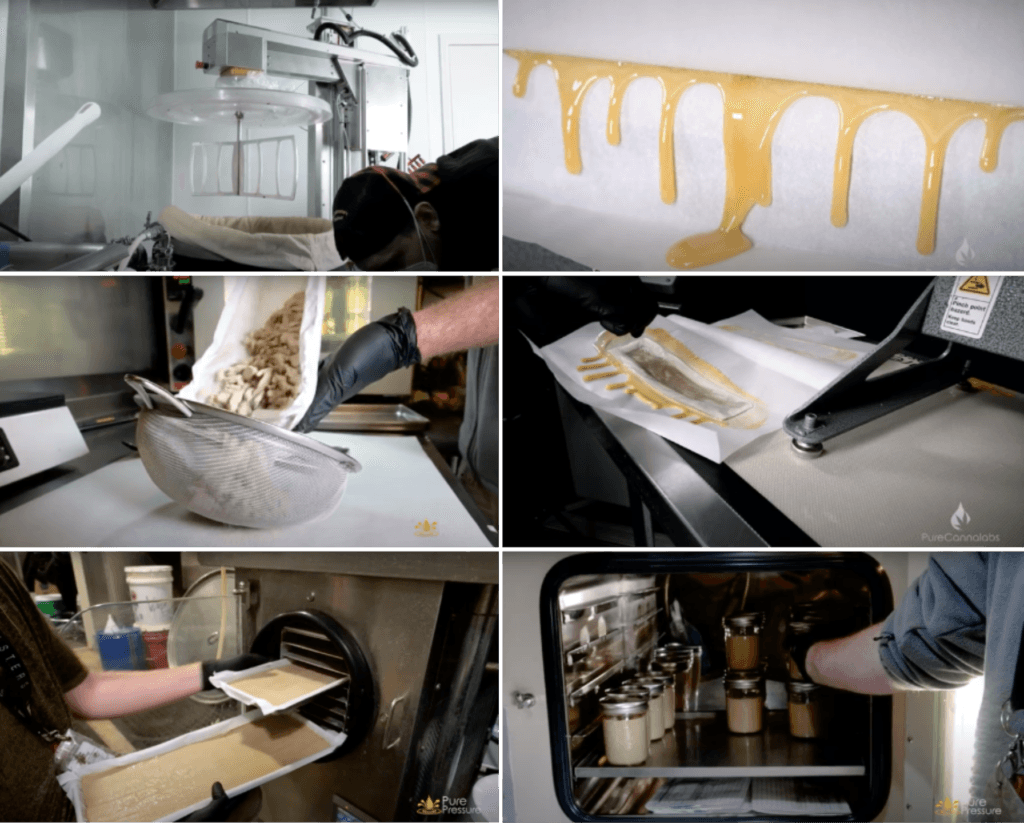
Critically, the new regulation removes an ambiguity that trips up other jurisdictions: “produce” means extraction by any process, solvent or non-solvent. There is no carrier-versus-solvent debate at the licensing threshold. Ice-water hash and pressed rosin are production, the same as ethanol or CO2 extraction — one licensing framework covers boutique solventless and distillate alike. A single licensed facility can run both: rosin for the premium category, distillate for the vape and edible formats already moving in markets like Australia.
The solventless gap
So what happens to the kief and trim that hundreds of Thai cultivators produce as a byproduct? Ask any local LP and the answer is much the same: some is discarded, some sold to licensed extractors, but much of it inevitably finds its way into the local and grey markets — often sold under the counter at dispensaries. That material does not have to disappear. Under licence, it can be processed to medical standards and exported at a premium.
Solventless — the category commanding the highest prices in mature markets like the US West Coast — has a documented production and export pathway in Thailand. Almost no one is on it yet. Thai producers have a long history of taking established techniques and turning them into distinctly Thai innovations. Thai solventless as an export category does not exist today. Nothing in the regulations says it can’t.
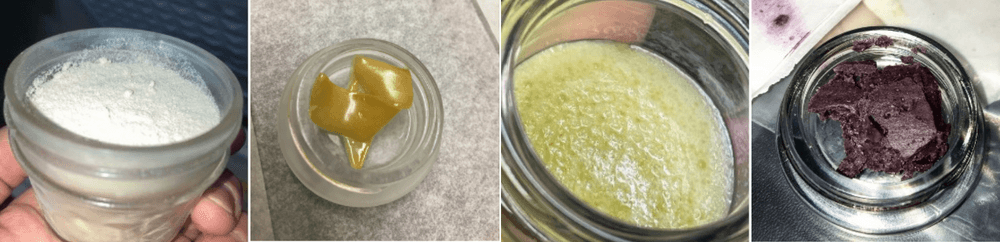
Context matters here. Thailand’s medicinal market is not the US West Coast, where pioneering artisans are miles ahead on boutique solventless — rosin jam, purple ice-water hash, nitro-rosin, and a list that keeps growing. Look instead at Australia, which has given patients access to prescribed cannabinoid medicines for a decade: flower dominates, and solventless remains a niche, unfamiliar product that many doctors are unwilling to prescribe — wary of its potency, or simply lacking the knowledge to weigh its benefits against flower. Yet smoked, it is a less crude, purer form of medicine, free of the cellulose, lignin, chlorophyll, and the plethora of other plant compounds that come with flower. The question increasingly answers itself: more brands are adding these products to their SKUs.
Whether Germany follows remains to be seen — but the patient appetite is unmistakably there.
What the pipeline implies
Run the FDA’s own figures forward. At ~1–2 applications a month, Thailand sees roughly 18–36 new extraction-licence applications over the next 18 months. If only half are approved — a conservative assumption — that adds 9 to 18 facilities, taking the operating base from 38 today to around 50 or more by late 2027. If the vast majority of applicants are eventually approved, the number of extraction facilities in Thailand could effectively double from where it sits now.
This is an extrapolation from the FDA’s stated application rate and current totals, not an official forecast — but the inputs are real, and the direction is not in doubt. Every new licence is a facility that must be built or upgraded: extraction equipment, GMP-grade infrastructure, trained personnel, analytical capability, and reliable API-grade input material. The supply chain behind the licences is where the near-term opportunity concentrates, and it is forming now while the export field still fits on one hand.
The calculus has flipped
For three years the barriers were real: until June 2022 the entire plant was a narcotic, and once it was descheduled the easy money was in flower — fast, low-barrier, cash-generative — while high-THC extracts stayed under the narcotics regime with Thai-majority ownership requirements, the capital cost of GMP-certified facilities, and a heavy compliance load. That kept the field of pioneers small.
The domestic flower market has now consolidated under the medical framework, the export pathway is proven by the first licensees, and official interest in export-oriented business is, in the FDA’s own words, growing. The Narcotics Control Division’s perspective on direction is explicit: exporters must meet the laws and THC limits of the destination country, pharmaceutical cannabis-extract exports should follow GMP, and the industry’s path forward lies in strengthening domestic producers to international standards across cultivation, harvesting, extraction, and finished product. The draft Cannabis and Hemp Act — expected at Cabinet in July 2026 — is set to keep flower tightly controlled for medical and scientific use, reinforcing the shift of value toward licensed, standards-compliant extraction.
The licences are the leading indicator: each one granted pulls equipment, talent, and API sourcing behind it. With the pathway now documented and the base steadily growing, it is a space international operators will be watching closely.
Subscribe for future articles, market insights, and developments shaping medicinal cannabis in APAC and beyond.
Join the extraction conversation at Agential Cannabis 2026, where licensed producers, extractors, regulators, suppliers, researchers, and investors will connect at BITEC Bangkok on 23–24 September 2026.
Register by 30 June to save AUD 400 with Early Bird tickets →